
What is biltong? Everything about its preparation, flavor, and the difference from beef jerky

Biltong is meat slowly air-dried, originally from South Africa. It has a rich, savory flavor, is high in protein, and is ready to eat straight away. Not a bar with a long list of ingredients, but real food that’s easy to take with you.


Still, biltong is not the same as beef jerky. The main difference lies in how it is cut, seasoned, and dried. In this blog, you’ll discover how biltong is made, what it tastes like, what it contains, and what to look for when buying biltong.

What exactly is biltong?

Biltong is a traditional way of preserving meat for longer. The meat is seasoned and then slowly air-dried over several days. It is therefore not fried or prepared at a high temperature. As moisture is removed, it becomes a concentrated, firm yet tender meat snack.


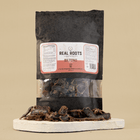
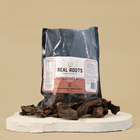
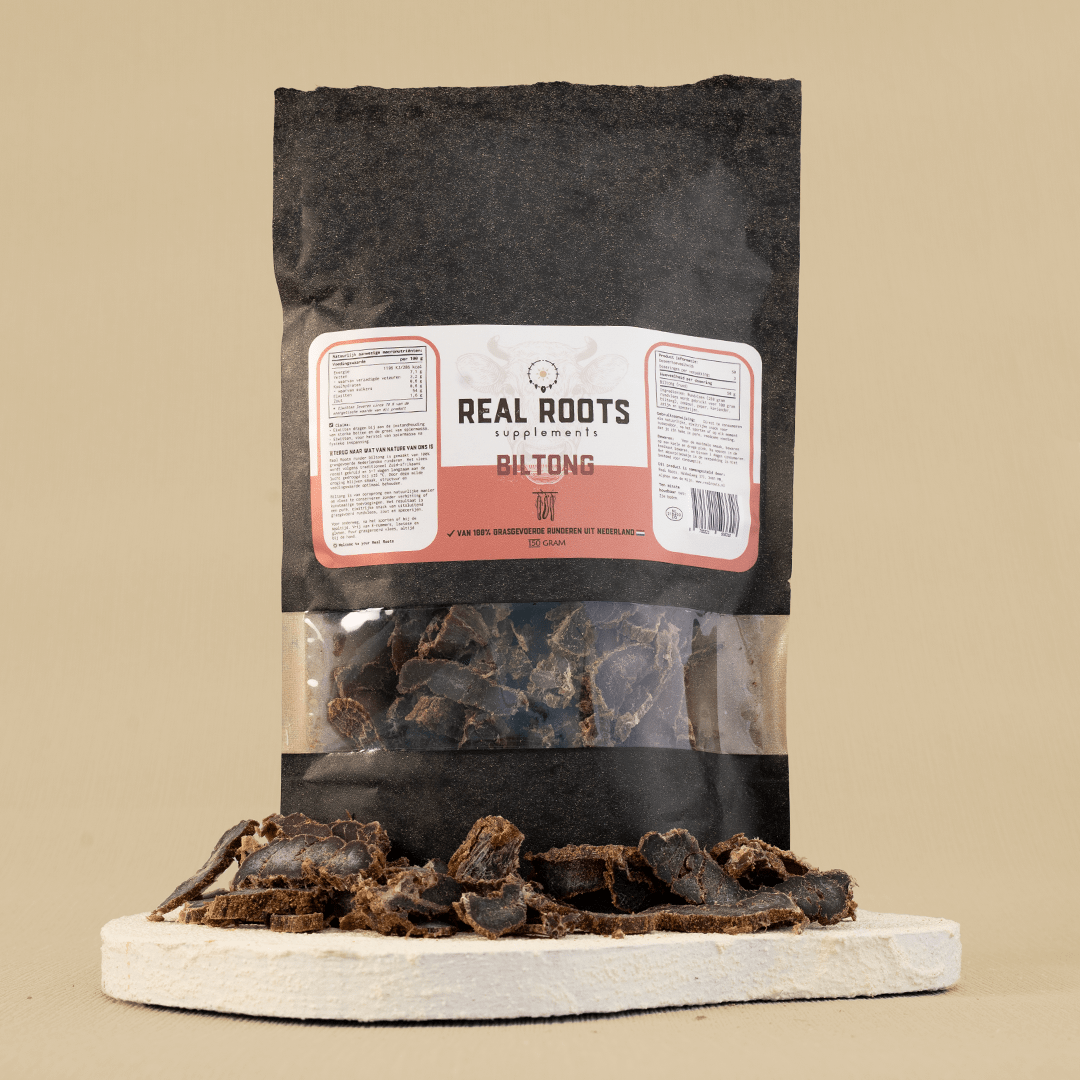
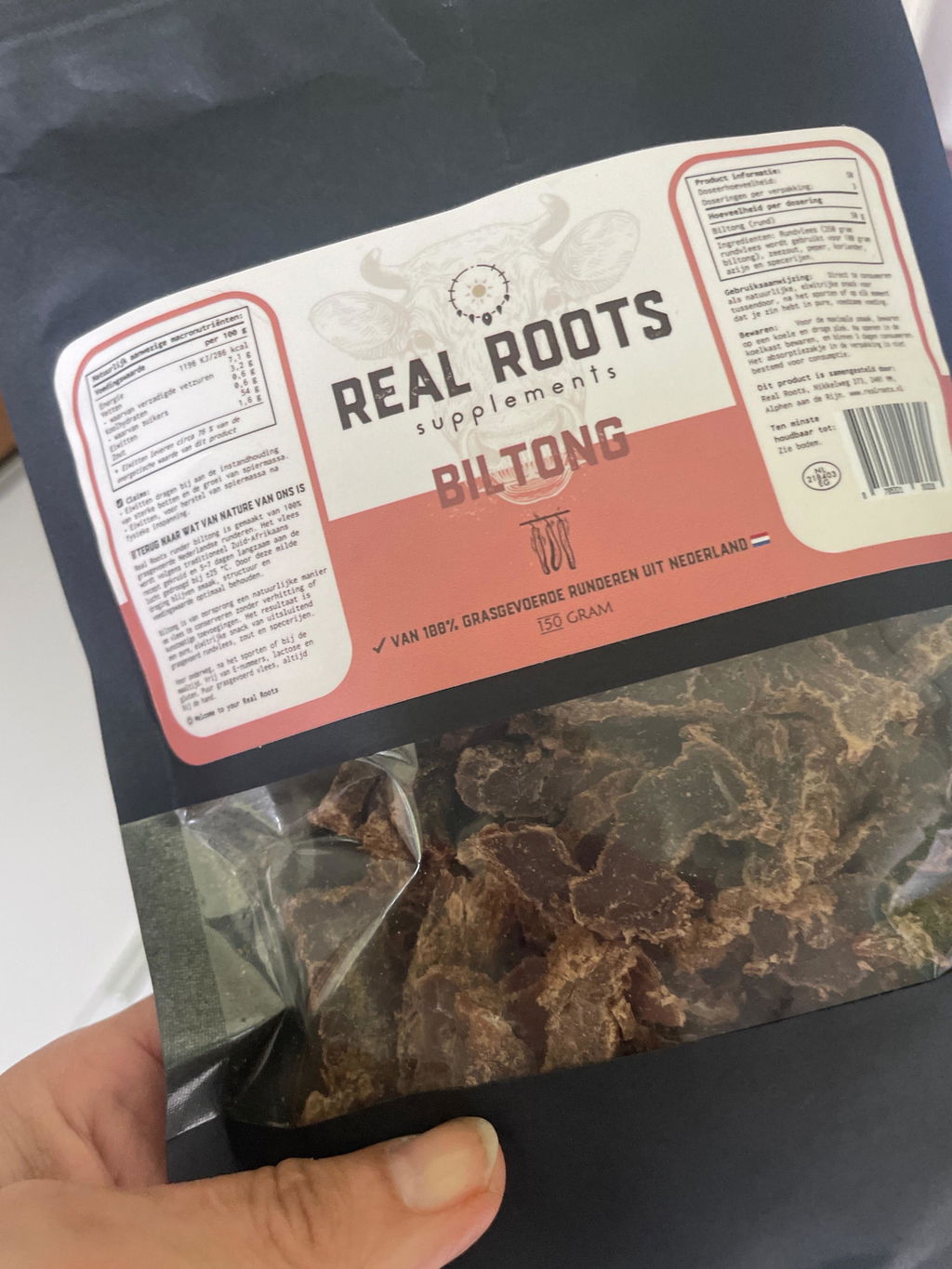
Real Roots biltong is made from 100% grass-fed Dutch cattle. The ingredients are straightforward:

  • beef;
  • natural vinegar;
  • sea salt;
  • pepper, coriander, garlic, onion and cloves.

No added sugar, E-numbers, lactose or gluten. Per 100 grams, the biltong contains approximately 54 grams of protein, 7.1 grams of fat and 0.6 grams of carbohydrates. Pure, powerful & practical.

How is biltong made?

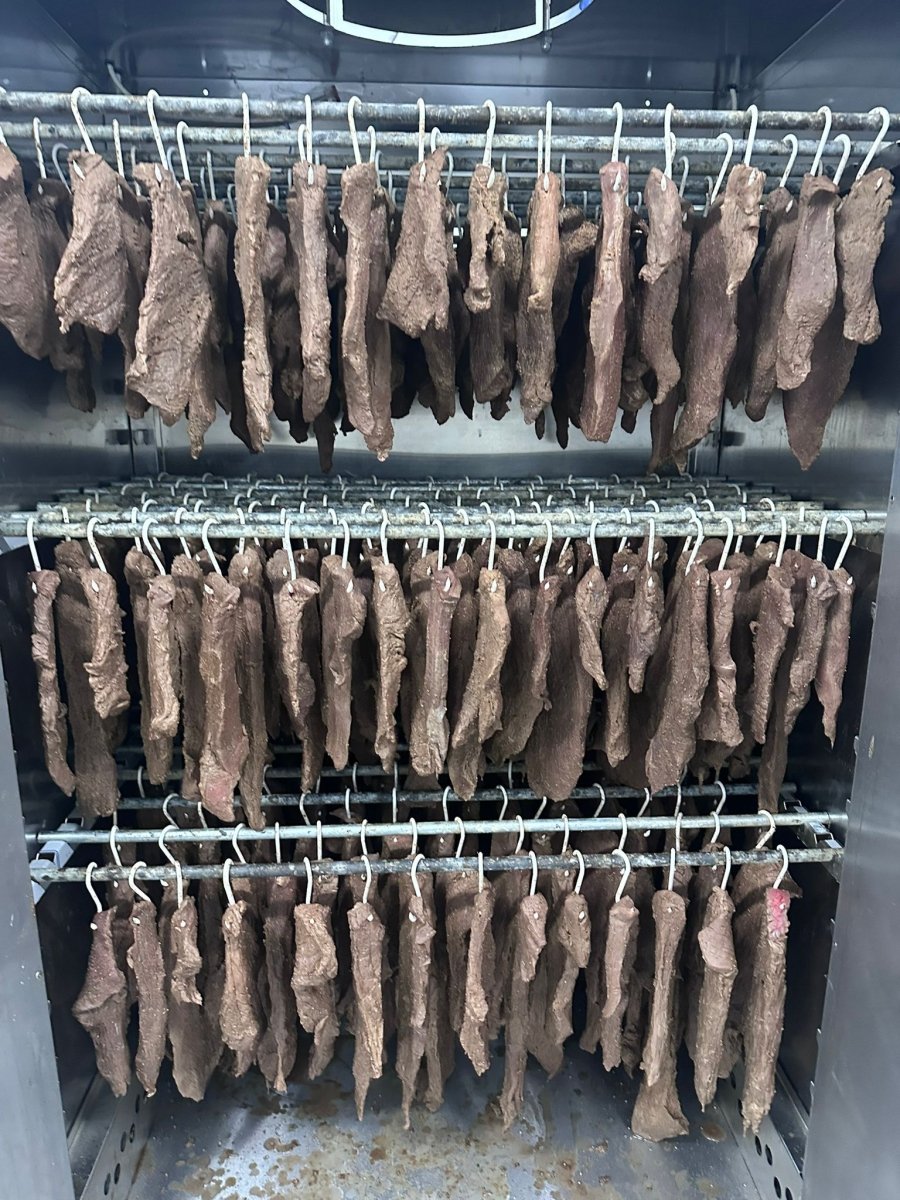
Good biltong mainly requires quality meat and patience. At Real Roots, the process begins with grass-fed beef from Dutch cattle. The meat is seasoned according to a traditional South African recipe with natural vinegar, sea salt, and spices.


  1. Selecting: the beef is carefully chosen and divided into pieces.
  2. Seasoning: natural vinegar, sea salt, coriander, pepper, garlic, onion, and cloves add flavor.
  3. Drying: the meat hangs in the air for 5 to 7 days at approximately 25 °C.
  4. Slicing: only after drying is the meat cut into bite-sized pieces and packaged.

The result is not a crispy meat snack, but biltong with a full flavor and a tender bite. Research into biltong describes how vinegar, salt, moisture loss, and packaging are linked to acidity, water activity, and microbiological quality. View the research on PubMed.

Pure meat. Time, air & spices.

During the slow drying process, much of the moisture is removed. This concentrates the flavor and nutrients. Approximately 285 grams of fresh beef is needed to make 100 grams of biltong. So, a 150-gram package is equivalent to around 425 grams of fresh meat.


What you get:

  • a rich, natural meat flavor;
  • approximately 54 grams of protein per 100 grams;
  • naturally occurring vitamin B12 and minerals such as iron, zinc, and selenium;
  • a snack with no added sugar or artificial flavor enhancers.

No complicated production process. Just quality meat, carefully seasoned and slowly dried.

150 grams • 3 to 5 servings
54 grams of protein per 100 grams

100% grass-fed beef from Dutch cattle.

Slow air-dried for 5 to 7 days at approximately 25 °C.

54 grams of protein per 100 grams. No added sugar, E-numbers, lactose, or gluten.

150 grams per package, enough for approximately 3 to 5 servings.

Discover Real Roots biltong

30-day money-back guarantee

What does biltong taste like?

Biltong has a full, savory, and spicy flavor. Coriander and pepper take center stage, while garlic, onion, and cloves add extra depth. Natural vinegar balances the flavors without making the meat taste sour.


The texture also makes biltong special. The meat is firm, but generally more tender and less tough than many types of beef jerky. The exact bite may vary from piece to piece: some parts are a little softer, while others are firmer. That is part of what you can expect from a natural meat product.


You can eat biltong straight from the package. It is delicious on the go, after exercising, with drinks, or as a savory addition to a meal.

Biltong versus beef jerky: what’s the difference?

Biltong and beef jerky are both dried meat snacks, but their preparation methods and flavors are clearly different. Because recipes vary by producer, below we deliberately refer to what often or generally happens.

BiltongBeef jerky
Usually dried as a larger piece of meat and sliced afterwardOften sliced into thin strips before drying
Dries slowly in the air, without a separate heating stepCommercially, it generally undergoes a controlled heating step during preparation
Natural vinegar, salt, and dry spicesOften marinated in sauces
Rich, spicy, and relatively tenderTypically sweeter, smokier, and chewier
Real Roots: no added sugarMay contain added sugar

The U.S. food safety authority USDA FSIS advises heating meat to a safe internal temperature before drying it when making jerky at home. This underscores why you should not simply copy commercial drying processes at home. Read the USDA FSIS food safety advice.

Discover the pure ingredients

Reviews from our biltong lovers

5 stars

“Really delicious and very nutritious! I’ll definitely order more! My two-year-old daughter loves it too.”

Lotte v. • July 24, 2026

Verified buyer via Judge.me

3 stars

“They taste good
But I had to get used to them”

Anonymous buyer • July 20, 2026

Verified buyer via Judge.me

5 stars

“Delicious snack”

Jolanda • July 2, 2026

Verified buyer via Judge.me

Favorite • 5 stars

“Delicious snack for the carnivore. Pure, with no strange ingredients. I’ll definitely be ordering this fantastic product more often.”

Liesbeth • June 24, 2026

Verified buyer via Judge.me

View the biltong

Eating and Storing Biltong

Is biltong healthy?

Biltong is high in protein. Protein contributes to the growth and maintenance of muscle mass. Whether a product is a healthy choice for you also depends on your overall diet and portion size. Also take the salt content into account: Real Roots biltong contains 1.6 grams of salt per 100 grams. You can find more information about protein requirements at the Netherlands Nutrition Centre.


When do you eat biltong?

Biltong requires no preparation. Tear open the package and eat it as a snack, take it with you during a long workday, or serve it on a snack platter. Its high protein content also makes it a good choice after exercise.


Storage: keep an unopened package in a cool, dry place. Real Roots biltong generally stays fresh unopened for 45 to 60 days after purchase; always check the date on the package. After opening, preferably store the biltong airtight in the refrigerator and consume it within three days. The moisture-absorbing sachet in the package is not edible.


Sources & further reading

wwk_logo_sm-64x64 Created with Sketch.

4.67/5 from 12 reviews • verified on July 24, 2026

Real nutrition, always within reach

Taste the power of pure meat

100% grass-fed beef • 150 grams

The review data comes directly from the linked Judge.me overview on the Real Roots product page. The quotes shown above have been reproduced verbatim.

Source: Judge.me on Real Roots

Verified buyer via Judge.me

Frequently asked questions about biltong

The most important questions about biltong, answered briefly and clearly.

Is biltong raw meat?

Biltong is dried, ready-to-eat meat. Unlike many types of jerky, it does not undergo a separate heating step. That is why a controlled recipe, acidity, salt content, drying time, humidity and hygienic production are important.

Does biltong contain sugar?

Real Roots biltong contains no added sugar. The nutrition table lists 0.6 grams of naturally occurring sugar per 100 grams.

Does biltong fit into a keto or carnivore diet?

With 0.6 grams of carbohydrates per 100 grams, this biltong is very low in carbohydrates. You decide whether the product fits your diet.

Why does biltong cost more than many other snacks?

Approximately 285 grams of fresh beef are needed to make 100 grams of biltong. A great deal of moisture is lost during drying, leaving behind a concentrated product.

Can you safely make biltong yourself?

Drying meat requires precise control of time, temperature, moisture, acidity, and hygiene. Therefore, use a validated recipe and reliable process. Vinegar or marinade alone does not automatically make raw meat safe.
