

Freeze-drying organ meat: how does it work, and what is preserved?

In freeze-drying, organ meat is frozen first. It is then placed under low pressure, causing the ice to turn directly into water vapor. This is called sublimation. Because much of the moisture is removed without prolonged exposure to high heat, the shape and many sensitive components are generally better preserved than with conventional hot-air drying.


“Better preserved” does not mean that every molecule remains completely unchanged. The raw material, freezing rate, vacuum, drying time, oxygen, packaging, and storage conditions collectively determine the final quality.

Freeze-drying removes water at low temperatures

  1. Preparation: the organ meat is selected and reduced in size.
  2. Freezing: the water present turns into ice.
  3. Primary drying: the ice sublimates under vacuum.
  4. Secondary drying: the remaining bound moisture is reduced further.
  5. Grinding and encapsulation: the dry product is processed and sealed airtight.

A carefully controlled process monitors time, temperature, and residual moisture.

Step by step: from organ to dry powder

The scientific review on freeze-drying describes low pressure and low temperature as the core of the method. Less heat may be beneficial for heat-sensitive substances and sensory properties.


On the other hand, freezing, drying, grinding, and exposure to oxygen can themselves also cause changes. The matrix of meat is also different from that of fruit, plant extracts, or medicines. Results from one product group are not automatically transferable to organ meats.

Why low temperature matters

  • Minerals: do not evaporate with water, but the measured content per gram increases mainly because moisture is lost.
  • Proteins: remain largely present, although their structure may change.
  • Vitamins: retention varies by vitamin and process.
  • Fats: may remain sensitive to oxygen, light, and storage time.

Without laboratory analysis, no one should promise exact retention percentages.

Freezing + vacuum + sublimation
water removed without prolonged high-heat treatment

Water turns directly from ice into vapor.

Low temperatures can protect delicate fabrics.

Not everything remains 100% unchanged.

Origin, testing, and packaging remain important.

View the freeze-dried Organ Mix

30-day money-back guarantee

What stays the same and what can change?

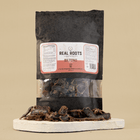
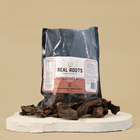
We describe the Organ Mix as raw and freeze-dried to preserve as many nutrients as possible. 


The mix contains equal parts liver, heart, kidney, and spleen from grass-fed Dutch cattle. The beef gelatin capsule is the only other ingredient.

Freeze-drying versus heat drying

The processes side by side.

Freeze-dryingHot-air drying
The product is frozen firstThe product is heated directly
Water disappears under vacuumWater evaporates through warm air
Relatively low product temperatureGenerally higher temperature
Long and costly methodOften faster and cheaper
Good quality possibleQuality depends heavily on temperature and time

No drying method can make poor raw materials good. Origin, hygiene, and batch control remain necessary.

View the freeze-dried Organ Mix

Four quality questions for the label

1. Raw material

“Which animal species and organ does the product come from?”

Origin

Technical explanation without an absolute preservation claim

2. Process

“Is it listed as raw and freeze-dried, or just dried?”

Method

Technical explanation without an absolute preservation claim

3. Composition

“Are the percentages and capsule material visible?”

Transparency

Technical explanation without an absolute preservation claim

4. Quality

“Is there information about testing, storage, and shelf life?”

Control

Technical explanation without an absolute preservation claim

View the full ingredients list

Freeze-drying is no guarantee of perfect preservation

What freeze-drying does not do

Freeze-drying does not automatically sterilize a product, nor does it prevent oxidation indefinitely. A safe raw material, controlled process, suitable packaging, and dry storage remain necessary.


“Raw” is not a health claim either. It describes that the organ meat has not been heated like a cooked meal. For nutrients, a current product specification or laboratory analysis remains stronger evidence than a general assumption about the method.


Sources & further reading

wwk_logo_sm-64x64 Created with Sketch.

Freeze-drying explained technically • checked on July 30, 2026

Raw freeze-dried organ mix

View origin and quality information

Organ mix • raw freeze-dried and transparently formulated

This section contains no customer reviews. It provides practical points to consider based on the sources mentioned.

Sources: peer-reviewed process technology and the current Real Roots label

Technical explanation without an absolute preservation claim

Frequently asked questions about freeze-drying organ meat

The main questions answered briefly and clearly.

What is freeze-drying?

Freeze-drying is a drying method in which a product is frozen and the ice changes directly into water vapor under low pressure.

Does organ meat get hot during freeze-drying?

The process operates at relatively low product temperatures. The exact temperature and duration vary by process and manufacturer.

Are all nutrients fully preserved?

No, you cannot promise that in general. Many components can be preserved well, but the raw material, process, oxygen, packaging, and storage affect the final product.

Does freeze-drying make a product sterile?

No. Freeze-drying is not automatically a sterilization method. Safe raw materials, process control, and quality control are still necessary.

Which organs are included in Real Roots Organ Blend?

The Organ Mix contains equal parts beef liver, beef heart, beef kidney, and beef spleen, plus a beef gelatin capsule.
